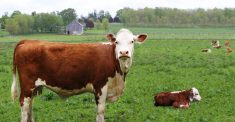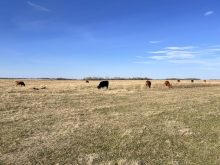


Making some refinements to a managed rotational grazing system can lead to a significant increase in the amount of feed biomass grown and provided to livestock.
WHY IT MATTERS: Farmers can gain more greater soil benefits from employing regenerative principles along with rotational grazing.
That’s according to Mississippi farmer and retired academic Allen Williams, a sixth-generation family farmer and founding partner in the consulting firm Regenified. He believes if “adaptive, regenerative grazing” can take a swath of what looked like northern Mexican desert and transform it — increasing forage biomass by 4.5 times and ranch profit’s by 350 per cent — then it can be effective anywhere.
Read Also

Ontario startup turning dairy waste into compostable plastics
Launch Bioindustries, a Toronto biotech startup, is working to process wastes from the dairy sector and other streams into biodegradeable plastics.
At the recent Ecological Farmers Association of Ontario (EFAO) annual conference in London, Williams said among academics, the “predominant way of thinking is that the soil is a giant chemistry set.”
This has largely ignored the soil biology, he says.
He says when he visits a farm, he first looks at the surface of the soil and can determine some key things that have happened to it over the past several years.
“And especially when I stick a shovel in your soil, that reveals decades of what you’ve been doing. So nobody can lie.”
His gave an example of pair comparisons his consulting firm conducted of neighbouring grazing-based farms in several states. Farms following regenerative principles for five or more years were paired against others not using a regenerative approach. On average, farms using regenerative practices were four times more powerful in the sequestration of greenhouse gases.
Conventional and managed rotational grazing farms were still greenhouse gas sinks, with rotational grazing tending to be better at sequestration.
But none were as powerful as the regenerative farms.
The regenerative farms were also home to three times more grassland birds and 33 per cent more beneficial insect species.
“The birds can go wherever they want. And even though there were pastures on both farms, they were far more likely to choose the regenerative pastures.”
One of the big kickers for Williams, though, was that, on average, the soil on the farms using regenerative practices had 2.3 times greater effective water infiltration as measured in inches per acre per hour.
“This is highly impactful.”
His firm has measured water infiltration rates at hundreds of thousands of locations, and the rates recorded on those comparison-study regenerative farms are significant.
In much of the long-term cultivated land in the world, infiltration rates have decreased over the decades, he says. When this happens, effectively, “an inch of rain is not an inch of rain.”
“Why do you think our droughts are getting worse? And why do we think our flooding is getting worse?” Williams asked.
“The good news is we can fix it. And we can fix it more quickly than you might think.”
Regenerative agriculture, Williams explained, seeks to repair, rebuild and restore ecosystem function. He showed slides of a 50,000-acre ranch in Mexico’s Chihuahua desert; there was almost no vegetation in the first slide, but a historic photo from 1865 showed grass up to the knees of men standing at the same location.
For his firm’s six-year transformation of the ranch, no seed was purchased.
“The only tools we used were livestock, water for the livestock, and how we moved those livestock around the landscape,” he says.
There were “biological hotspots” on the ranch where they could initiate their efforts, then radiate out from there using single-strand polywire temporary fencing.
The ranch averages three inches of rain per year. Yet after six years, there was significant biomass growing in the form of grasses and other native plants.
Six principles to follow
One of the first mistakes made by farmers considering regenerative agriculture, Williams warned, is to cherry-pick one or some of the system’s six principles. You’re not using regenerative agriculture, he said, if you’re not following all six principles:
- Know your context: Know your own farm; the practices that comply with the six regenerative principles can vary depending on each farm’s characteristics.
- Minimize disturbance: Aside from unnecessary tillage, this can also include overgrazing, applying too much manure or introducing too many chemical inputs.
- Keep the soil covered: “Overgrazed pastures, in terms of soil temperatures, are no better than a plowed field.” Through practices like these, “we’re pasteurizing our soil microbes.”
- Diversity: “Monoculture, monoculture, monoculture has got us into a whole lot of trouble.” But it’s not just about diversity of plant species, soil microorganisms and livestock species; it’s also about diversity of cropping and grazing practices. On pastures, Williams advises, be prepared to alter stocking densities, alter rotation patterns and alter paddock sizes depending on conditions.
- Maintain living roots in the soil.
- Integrate animals.
Managed rotational grazing is one well-recognized way to introduce livestock back into agriculture. But Williams stresses “regenerative adaptive” grazing takes it further.
“Rotational grazing tends to be prescriptive.” On their farm, they move all species every day, sometimes multiple times per day. Paddock sizes can also change every day.
“I’m adapting to the conditions.”
Don’t graze by plant height, Williams advises, but rather by plant leaf volume. One study showed grazing of 50 per cent of the leaf volume led to a two to four per cent stoppage in root growth, but when it increased to 60 per cent of leaf volume, the root growth stoppage jumped to 50 per cent.
The key is plant recovery. In grass species, if there are still blunt edges on the leaves, they’re not ready for re-grazing. Livestock shouldn’t be re-introduced until there are four leaves with sharp tips and the plants are starting to turn tan in colour.
However, if you repeatedly allow only this level of recovery on the grasses, Williams says, you won’t see any progress in biomass production. A rest period should be added on top of the recovery time — with an occasional “extended rest period” for each paddock.