

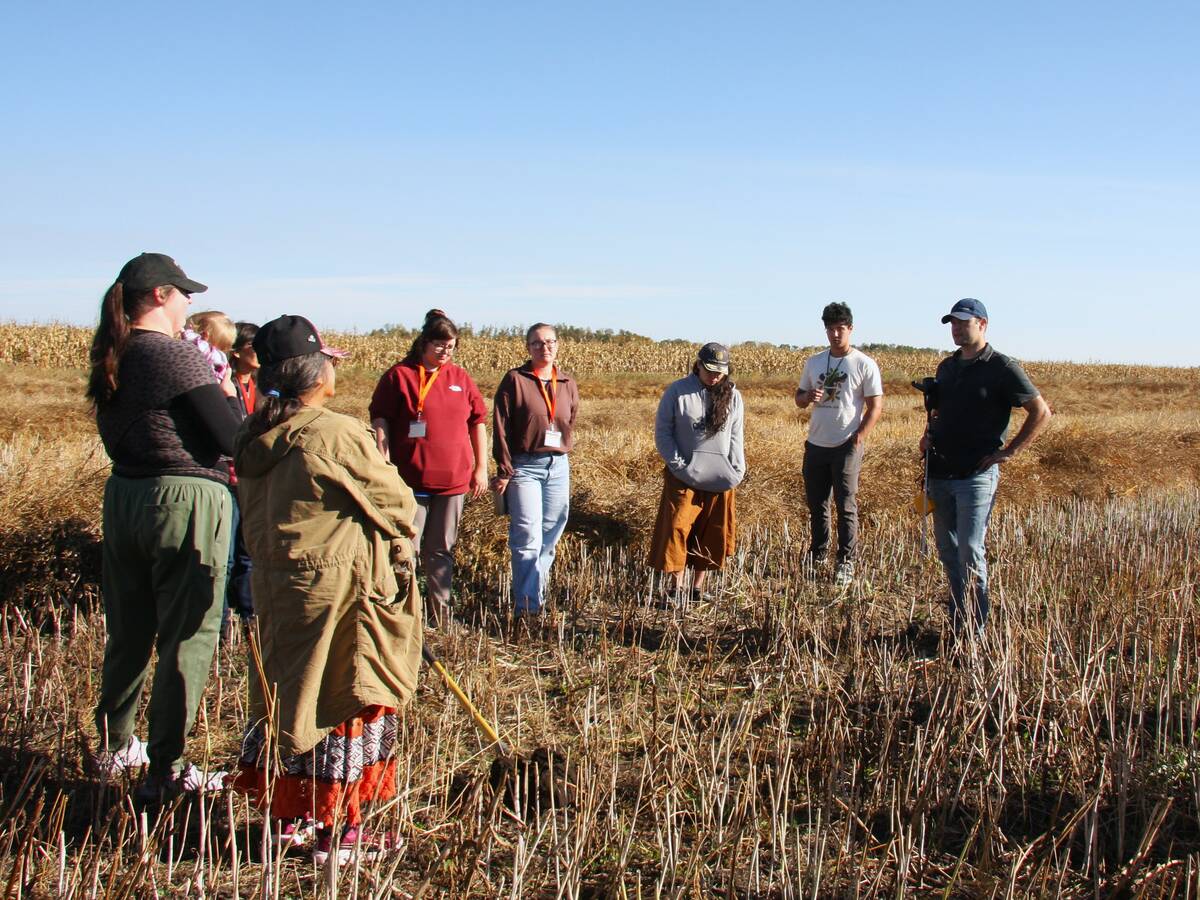
Canada’s Truth and Reconciliation process calls for enhanced access to land by Indigenous people for cultural purposes, but a lack of clarity on what this means in practice has many owners of that land concerned.
Originators of a movement among Prairie province farmers to open up access to their land for use by Indigenous people told Ontario guests that they can’t offer a “framework” for kickstarting a similar effort here — aside from hosting meaningful conversations about Indigenous rights under historic treaties.
“It’s listening. That’s the primary thing,” southwest Saskatchewan farm family member Joel Mowchenko told attendees of the Ecological Farmers Association of Ontario (EFAO) annual conference in London Dec. 2.
Read Also
Ontario startup turning dairy waste into compostable plastics
Launch Bioindustries, a Toronto biotech startup, is working to process wastes from the dairy sector and other streams into biodegradeable plastics.
The farm where Mowchenko grew organic grains and raised grass-fed beef that’s now run by extended family joined the Treaty Land Sharing Network (TLSN) shortly after it launched in 2021. The land is now officially available for Indigenous people to use for purposes ranging from wild plant and berry gathering to cultural ceremonies.
The network, he stressed, prefers the term “landholder” as opposed to “landowner.”
Mowchenko describes himself as “a fourth-generation settler” with Russian/Ukrainian and western European roots who grew up in Treaty 4 territory. He was joined during the EFAO conference by Duck Lake-raised Cree/Metis educator and treaty expert Amy Seesequasis, a TLSN co-founder.
The pair explained that, since 2007, the Saskatchewan government has sold nearly two million acres of Crown land. These lands weren’t necessarily entirely accessible for non-landowners to use but, for Indigenous people, they were certainly more accessible than private land held outside Indigenous hands.
Reserve lands, meanwhile, make up just two per cent of Saskatchewan’s land mass.
Amid an environment of increasing tension around land access for cultural purposes, 22-year-old Colten Boushie of the Red Pheasant Cree Nation was shot and killed in 2016 on a farm near Biggar. The landowner (and shooter) was eventually acquitted.
In response to this incident, Mowchenko offered, the government — “rather than trying to address the problem of land access for treaty rights” — passed stricter anti-trespassing legislation.
For some in rural Saskatchewan, however, this sparked what he described as “a countermovement of landholders who had been influenced by the (Truth and) Reconciliation process” who “wanted to take some concrete actions.”
He added that he and other rural residents recognized that “there were some difficult truths that we need to face up to,” including the persistence of “a substantial problem with racism” and an ongoing reality of treaty rights not being honoured.
Seesequasis remembers that, around the same time, she was running a traditional dance company and was becoming increasingly afraid to be seen and identified as an Indigenous person in rural Saskatchewan. But she was approached by six women with settler backgrounds from different farming communities and asked to help explore ways of bringing the province back from this precipice.
“(Those women) decided we have to do something,” she told the EFAO audience.
“They came to me as mothers too, who saw how terrible it was for a mother to lose her son and not have justice served.”
After about three years of preparations, TLSN officially came into being on the Smillie/McCreary family farm near Bladworth, Sask., in 2021. “We recognize the treaties (with Indigenous nations) are agreements to share land, not land surrender as many of us were taught,” said co-owner Mary Smillie in an article at the time in The Western Producer.
“We believe that welcoming Indigenous land users to gather plants and medicine, to hunt and hold ceremony on the land that we farm is a small but critical step toward upholding our responsibilities as treaty people.”
Fast forward four years and, during last summer’s wildfires, people were evacuated from Pelican Narrows in northern Saskatchewan and accommodated in hotels in Prince Albert and other towns. Their diets changed as a result, with a lot more convenience foods and take-out orders. In an effort to provide more nutritious, culturally appropriate meals, arrangements were made for a group of Indigenous hunters to harvest moose from a TSLN property in eastern Saskatchewan.
Meanwhile on the Mowchenko farm near Moose Jaw, an Indigenous artist “harvested” boulders for use as part of an installation in Regina exploring pre-European contact ecosystems.
Without a source of annual funding, the TLSN — with two part-time staff members — operates almost entirely based on grants, donations and tireless volunteers. And despite his farm’s recent interaction with the Indigenous artist, Mowchenko admits he hoped more land access would have happened by now.
“Things just take time. It takes time for relationships and trust to build,” he says.
But he says trust is growing, with the Network currently taking in approximately 60 locations and 30,000 acres across Saskatchewan and southeastern Alberta.
Although land use isn’t overwhelming, he says the initiation of community discussions — what the duo says Ontario landholders should pursue if they want a similar opportunity here — has been as valuable or even more valuable than the stated goal of the organization.
“People who looked like me — oftentimes with good intentions but sometimes with bad intentions — did some bad things” that led to the near extermination of First Nations culture, says Mowchenko. Now, he argues, it’s time to listen and ask “what can we do?”
“Part of becoming a member of the network is committing not only to allowing access to the land but also continuing that knowledge-sharing aspect,” he explained.
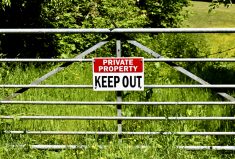
Signs posted proclaiming membership in the Network make a very public stand and “allow those conversations to take place — sometimes difficult conversations with neighbours” — as a counterpoint to the “no trespassing” signs and the anti-trespassing legislation.
Seesequasis says the aim of those conversations should be to build understanding of what treaties are, and break down misconceptions so people know what treaties aren’t. She called on non-Indigenous people to “not carry the guilt of what happened in the past.”
“The work isn’t as hard as we make it out to be. Often, we’re waiting for governments to act,” but it’s our relationships that drive this, she says, adding it represents an opportunity to make those relationships strong enough that they become part of any government policy that is eventually written.
Recalling her initial interactions with the group of rural Saskatchewan mothers concerned about the Colten Boushie aftermath, she said her involvement in bringing together the TLSN “is always going to be one of my life’s greatest works because of the connections that were made and the bridges that were built.”
She recalled her father’s words when she was a child about Indigenous people’s relationships with settler culture:
“We’re all family. We all share space. And we all deserve a good life.”