

While high pH knolls tend to be more common in Ontario, often caused by soil erosion leaving higher pH calcareous subsoils, this is not the case for all regions.
How do low pH knolls develop?
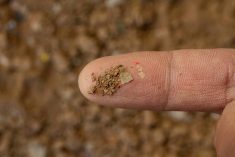
Low pH knolls can develop on undulating landscapes where surface soils formed from deposits of sand, such as where glacial meltwater deposited sand at the entrance to historical glacial lakes (Webber and Hoffman, 1967). Tillage, water, or wind erosion may have also removed topsoil from these knolls. Soils naturally acidify over time through rainfall, organic matter breakdown, and mineral weathering, and through applications of ammoniacal fertilizer. Sandy soils have less ability to buffer against these processes, resulting in lower pH.
Read Also

Ontario startup turning dairy waste into compostable plastics
Launch Bioindustries, a Toronto biotech startup, is working to process wastes from the dairy sector and other streams into biodegradeable plastics.
A low pH case study
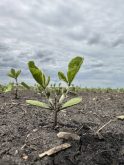
We visited a field in Kent County in May where a producer was struggling with crops establishing on some sandy knolls. There were questions as to why – soil pests? Nematodes? pH? Fertilizer injury? The first step in diagnosing emergence issues is to dig for clues. Most seeds appeared to have germinated, but many failed to emerge and seedlings appeared off colour with poor vigour. While the odd wireworm was found, most seedlings failing to emerge did not show obvious feeding damage. Un-emerged seedlings were also not showing clear, characteristics fertilizer burn symptoms such as blackened roots, missing or “nubbed” seedling roots or root tips.
With no obvious symptoms to explain stand loss, soil samples were collected from the poor establishment area on the knoll and from areas off the knoll where the corn stand was healthy. Two major differences jumped out – much lower pH and magnesium in the poor stand on the knoll compared to the healthy stand around the knolls.
To read the full article, “Getting to Know Your Knolls Part 2,” visit the Field Crop News website.