


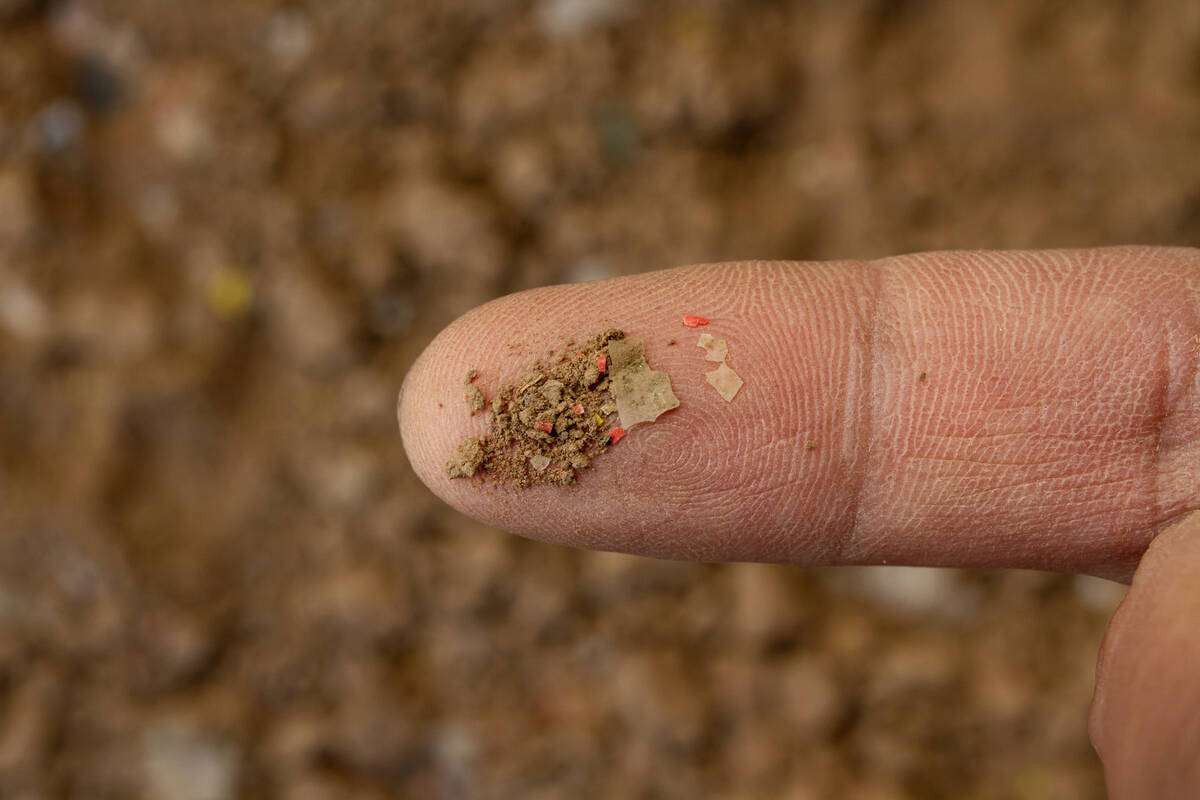
A new Chinese study shows microplastics are accumulating in agricultural soil.
The review highlights complex interactions between soil microbes and viruses that occur on the surface of microplastic particles. These microscopic relationships may influence soil health, ecosystem recovery and the long-term sustainability of agriculture.
Microplastics are plastic fragments smaller than five millimetres that enter farmland through sources such as plastic mulch, sewage sludge, irrigation water and degraded plastic materials.
WHY IT MATTERS: Once in the soil, they can alter physical structure, disrupt nutrient cycling and affect the activity of soil organisms essential for plant growth and ecosystem functioning.
Read Also

Bruce Grey farmers, politicians meet in rural-urban collaboration
Bruce Grey farmers and officials discuss stronger farmland protection, policy reform, and rural-urban collaboration during the annual politicians’ meeting.
A 2023 study found China is the world’s largest user of microplastic mulches, averaging 17 to 20 million hectares annually or 68 per cent of global usage.
Figures from the Canadian government show Canada produces 60,000 tonnes of plastic waste on farms every year.
The latest research finds microplastics create unique microscopic habitats in soil called plastispheres, biofilm communities where microorganisms attach to plastic surfaces and interact intensely. Within these microhabitats, microbes and viruses form dynamic networks that may reshape microbial communities and influence soil processes.
Bacteriophages are viruses that infect bacteria. They play a central role in these interactions. By infecting and lysing (that is, rupturing the walls or membranes of) bacterial cells, they can regulate microbial populations and influence nutrient cycling. Viral activity can also transfer genes between microbes, including those related to plastic degradation or antibiotic resistance.
The researchers note these viral gene exchanges may have both positive and negative consequences. Viruses may help spread genes that enable microbes to break down plastic more effectively. But they could also accelerate the spread of antibiotic resistance genes or other harmful traits.
Scientists are exploring strategies such as phage-assisted microbial augmentation and virus-like particles loaded with catalytic nanoenzymes. These systems could potentially deliver enzymes directly to plastic surfaces and accelerate polymer breakdown.
The study notes these technologies remain largely theoretical and need careful evaluation before field use. Concerns include biosafety risks, unintended gene transfer and the complex ecological dynamics of natural soil environments.
A lack of long-term field data on how viruses, microbes and microplastics interact over time is also hindering researchers. Most studies rely on laboratory experiments or short-term observations, leaving major knowledge gaps about how these interactions evolve in real conditions.
Emerging technologies such as single-cell viromics, artificial-intelligence-driven host prediction and advanced multi-omics tools could help reveal the hidden viral networks operating in contaminated soils.
Ultimately, the study suggests that understanding the invisible partnerships between microbes and viruses may open new pathways for restoring soil ecosystems affected by plastic pollution.