

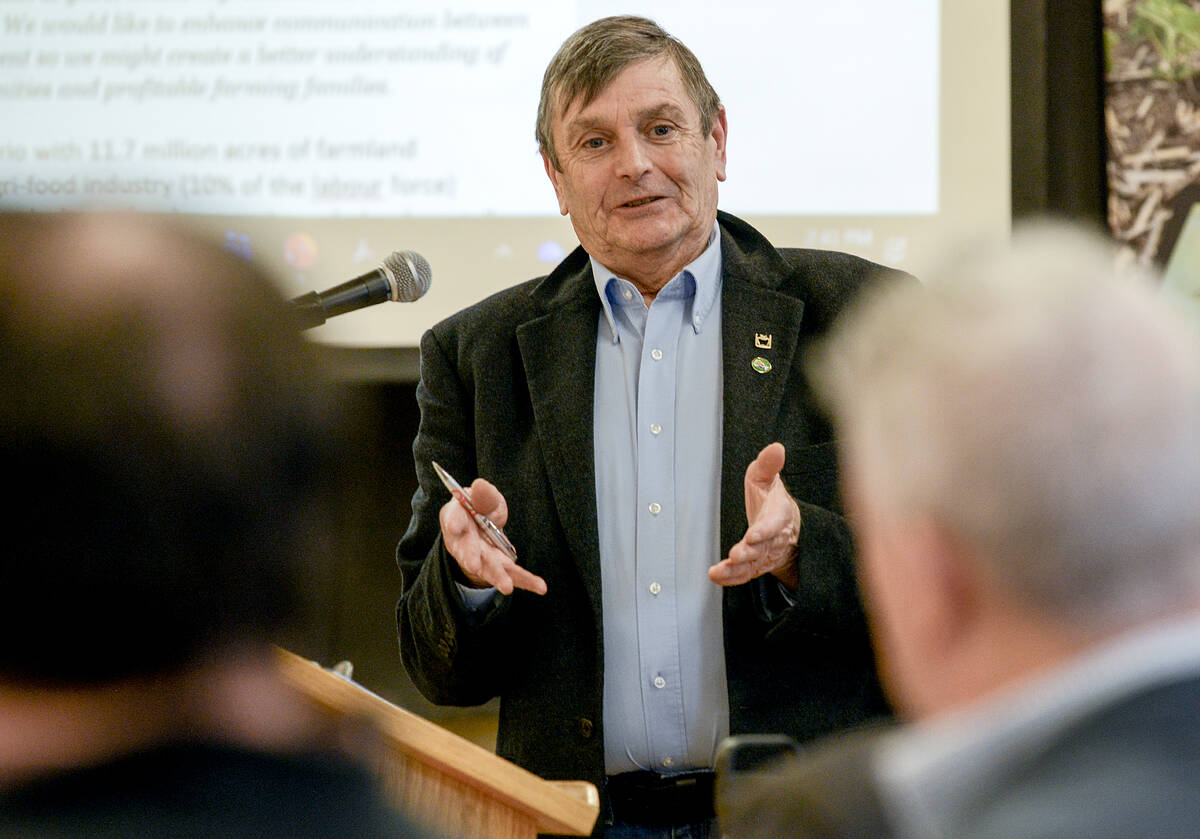
Farmland preservation, municipal bylaws and government policies were discussed at the Bruce and Grey Federations of Agriculture politicians’ meeting.
“Strong relationships are essential to ensure that agriculture continues to thrive in our region,” said Lindsey Coles, Grey Federation of Agriculture president, at the beginning of the March 21 meeting with politicians at the Elmwood Community Centre.
WHY IT MATTERS: Cultivating government relationships in a low-conflict environment amplifies agriculture’s voice in policy and trade decisions, ensuring rural Ontario’s needs are addressed.
Read Also
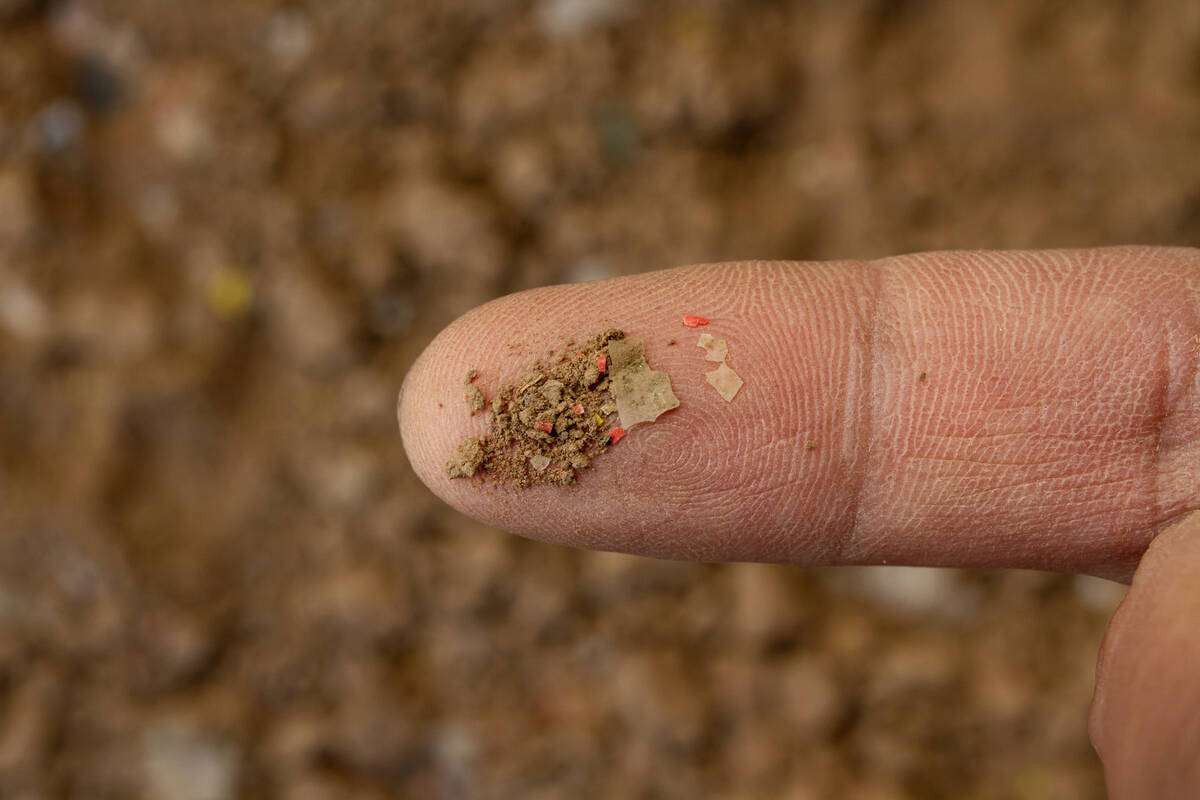
Viral networks in soil microplastics may shape future of sustainable farming
A new study finds microplastics in agricultural soil create viral–microbe networks that could impact soil health, crop productivity and sustainable farming practices
Greg Dietrich, who is the Bruce and Grey counties’ representative for the Ontario Federation of Agriculture, highlighted the value of government access amid concerns over farmland loss, labour shortages, temporary foreign workers and interprovincial trade.
“We need to work with local, provincial and national representatives to help ensure that our interests are understood and considered,” he said. “Advocacy is very important, as far as building relationships, securing investments and supporting farmers.”
Municipality of Brockton councillor Steve Travale said the meeting provided valuable insight and resources for local government, before encouraging organizations to reach out with concerns more often.
“Don’t be afraid to come to us, whether it’s correspondence to council, invitations to webinars,” he suggested, acknowledging it’s challenging with hundreds of municipalities. “Things like this are always top of mind for us and are appreciated. Especially when in more and more municipalities, the council isn’t always made up of farmers.”
Dietrich agreed, saying the increased voter base of larger urban areas tends to grab a higher percentage of attention, but it’s what’s outside of those areas that keeps everything rolling.
Predation and working livestock dogs
Jay Lennox, Ontario Sheep Farmer’s District 2 director, brought up challenges around predation reporting and bylaws that impact livestock guardian dog numbers.
The organization is working with the province to create an online self-reporting program for predation kills to streamline the process and replace the cumbersome municipal reporting system.
Currently, producers must contact the municipality or a local livestock evaluator, submit forms and await ministry approval — after which funds are disbursed to farmers through the municipality.
“Many municipalities in the province either are slow to deal with the administrative portion, or slow to disperse the money once they’ve received it,” he said. “We’re pushing the provincial government to move to a more modern program.”
Municipal bylaws limiting dog ownership cause issues for farmers with many guardian dogs. Farmers support these bylaws, but prefer clear definitions of exemptions for working guardian or herding dogs over kennel licences.
“The OSF has sent many a letter to all your municipalities suggesting what to do to have bylaws that support guardian dogs,” he said. “I want to congratulate South Bruce, because they’re one of the only ones that have it.”
South Bruce has bylaw exemptions for guardian and herding dogs if the farmer meets the criteria, including owning livestock and land zoned for agriculture, and if the dogs are licensed annually in accordance with the bylaw.
“We’ve got to really differentiate them from pets, right? They’re working dogs. They have a job to do,” Lennox said. “I wish I didn’t have to protect (my livestock) from coyotes, but I do.”
Administrative burden
According to an OSF study, municipalities with livestock guardian and herding dog bylaw exemptions experience lower predation rates, which lessens municipal administrative burdens.
“The goal here is to stop the kill,” said South Bruce Mayor Mark Goetz. “We should be using every means possible to stop the kill before it ever goes into a compensation claim.”
He’s fortunate that six of the seven councillors are farmers and understand, but he encouraged farmers to organize delegations to present to municipalities to help them understand the importance of including a clearly defined exemption for working livestock dogs into their bylaws.
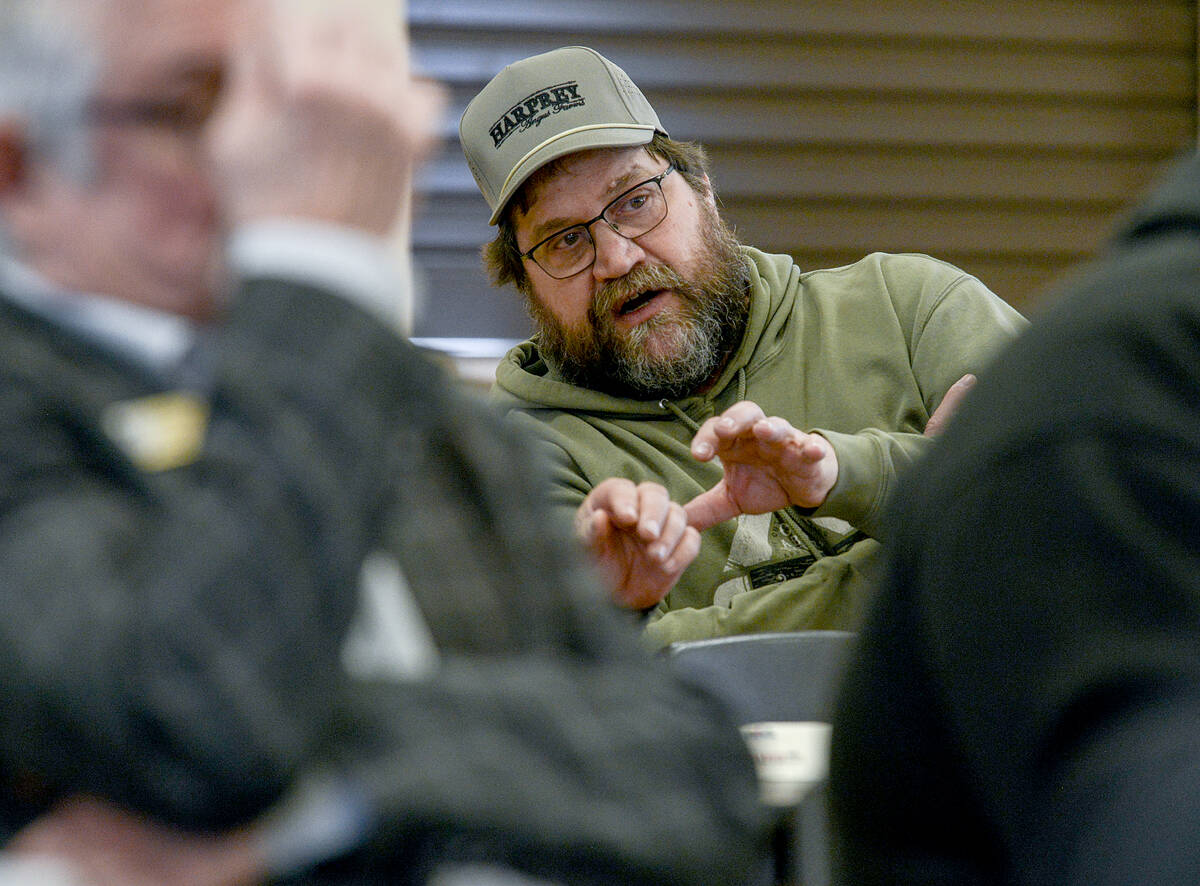
Chris Cossitt, president of the Bruce Federation of Agriculture, encouraged municipalities and farm organizations to recognize the range of predators in Bruce Grey.
“In the Northern Peninsula, they’re having problems with the bears taking calves,” he said. “And ravens — they take the eyes out of the calves. It’s becoming a bigger problem and nothing against wildlife, but it needs to be properly managed, (including) protection for livestock.”
Farmland protection raised concerns about how policies, access and land fragmentation can make arable land unfarmable.
Virtual farmland loss
Duncan Goetz, OFA policy analyst, said farmland loss is often depicted by striking imagery of heavy machinery ripping out orchards or paving over fields.
“Communities are rightly upset when they see this happen,” he said. “Virtual farmland loss is quieter. It’s a little bit harder to observe. It’s a consequence of policies, rules and social pressures.”
Arable land is taken out of production due to permits, road space constraints or property access challenges and fragmentation, making it unfarmable.
“It’s important to tailor your policies to the agriculture in your communities, because property access alone is a limiting factor for agriculture, as is property size,” Goetz said. “Incremental and cumulative effects slowly erode this land base. As you cut up the countryside, it becomes difficult for these farming operations to continue at pace.”
Adhering to minimum distance separation guidelines is critical to supporting livestock operations. When residential development is greenlit next to a food animal facility or sensitive land uses are created within it, farm operations and growth are frozen due to homeowner complaints.
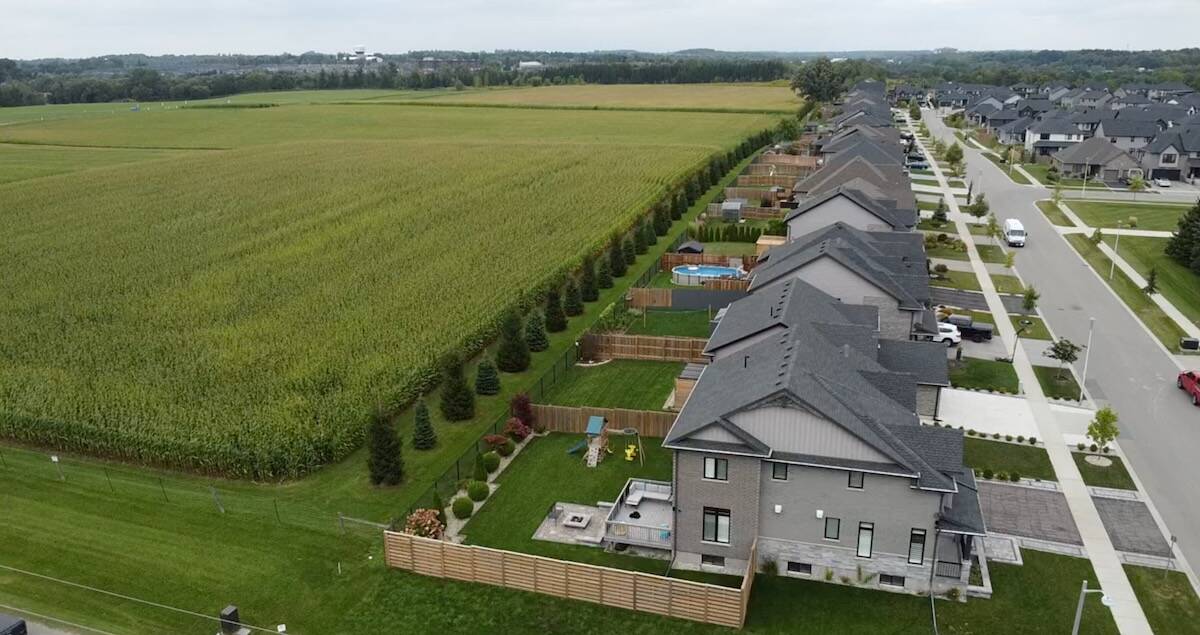
“It’s very difficult for these livestock operations that are frozen to pivot and grow within those constraints,” he said.
The OFA analyst added that between 1996 and 2021, Ontario lost 2.1 million acres of farmland, with 76 per cent of that loss attributed to official plan amendments in settlement areas.
Despite the sobering message, he urged policymakers to prioritize agricultural protection and actively use available tools when meeting with residents, business leaders, and fellow councillors.
“The most effective means of protecting farmland, that’s us,” he said.