


While new research — and interest from well-funded corporations — is coming soon, producers are still pretty much on their own in assessing the effectiveness of crop-enhancing biostimulants and biologicals, a specialist said at the recent Guelph Organic Conference.
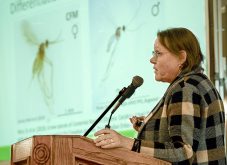
Scott Walker hails from a fruit and vegetable farm in Ontario but lives in Manitoba where he operates a consulting firm specializing in non-conventional nutrient and crop-protection products for Prairie cash cropping.
WHY IT MATTERS: If effective, biological and biostimulant products could provide crucial solutions for organic farmers, who are restricted on what inputs they can use under Canadian organic standards.
Read Also
How to start variable-rate fertilizer application
Variable-rate fertilizer can improve your field’s yield uniformity – but don’t expect huge fertilizer savings, an Ontario agronomist cautions.
Biologicals are living organisms, usually bacteria or fungi, that interact with the soil or plant to support growth. Biostimulants are substances that help plants take up nutrients more efficiently or tolerate stress better.
There’s often an inadequate explanation of how to apply biologicals and biostimulants, said Walker, using humic acid as an example. It’s crucial that producers know the ratio of humic acid to fulvic acid in their soil in order to properly apply the product. However, the test can be difficult to obtain and often producers simply do what they think is right without confirming.
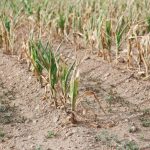
Showing photos of a side-by-side flax trial with one side having much bigger root systems, Walker noted this was from the application of a biostimulant. Photosynthesis sped up, causing exudites to be driven into the ground. However, it was very dry at the time of application. There was nothing for the roots to feed on, so the yield was actually higher in the crop without the biostimulant.
“You don’t get paid for pretty roots,” Walker said.
Research shortcomings
Walker spent much of the session identifying the shortcomings of current research for biologicals and biostimulants. He urged farmers to work around these shortcomings to gain confidence in product use.
Over the decades, funding has been the big challenge for getting research done, Walker said. He remembered in the mid-2010s seeing results from an academic research paper and convincing a couple of Prairie producers — whose wives painstakingly plucked leaves from canola plants for testing — to conduct side-by-side trials. The results were promising, but when he approached the Canola Council of Canada for support, he was turned down.
Producers can evaluate products at home. “Ask the (salesperson) for a sample,” Walker said. “Take it home and put it in a windowsill to see how it performs.”
He encouraged those in attendance to take time during the winter to dive into the details of these products. Research on the internet. Then research that research to see if it’s reputable.
When you type keywords into an online search engine, don’t rely on the AI overview or sponsored sites. “And actually read the (research) papers,” Walker said. “Yes, they can be very dry, but there’s good information buried there.”
Access to more specialized testing — of soil, plant tissues, plant saps — is coming, if not already here. Walker cited a lab in Red Deer, Alta. that provides a range of testing that, until now, has often only been available in Europe.
“As we get more and more of this, it will lead to you knowing what’s going to happen in your field in a matter of days,” he said.
Test carefully
Walker said farmers should stick to sampling regimes to which they’re accustomed. Use any new or alternative sampling opportunities as a learning tool. If they find they appreciate the information provided, they can add a new type of sampling to protocols in the future.
When monitoring the progress of side-by-side trials, don’t do it while travelling at 80 km/h along the roadway. Get out into the field. Sometimes it’s hard to see the details even when walking through the field, Walker added.
“You may not see anything when you’re walking but stop, pull up that plant and put on the tailgate. And, by golly, it will jump right out at you,” he said.
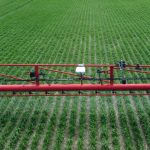
When recording yield, don’t rely on the combine’s yield monitor. Do it the old-fashioned way, but hopefully using new and larger-scale technology. Find a neighbour with weighing capabilities on a grain cart. Harvest 1,000 feet with a 40-foot header — that’s about an acre. Dump that in the grain cart. Zero out the scale and do the same thing again.
He encouraged audience members to work together on plots exploring questions of common concern. They can try out products and lobby farm organizations together to help secure funding to continue the work.