


With the cessation of shipping in the Strait of Hormuz, global markets are once again hit with significant shortages of fertilizer products and the petroleum used to make them.
With further price spikes and potential scarcity ahead, might it be time to try reducing costs and input requirements with variable rate application?
It might be – although a true reduction in required fertilizer volumes though a variable rate approach is unlikely.
Read Also
Ontario profit warranty program to eat split nitrogen risk for corn
Ontario corn growers can chase split nitrogen fertilizer application while someone else takes the adoption risk, Farmers for Climate Solutions says.
WHY IT MATTERS: Refining how we use fertilizer supports crop quality and uniformity.
Variable-rate fertilizer application is an approach intended to match fertility treatments with the specific needs in different parts of a field, so knowing fertility levels in those different parts of the field is critical, says Chris Snip, an independent agronomist from Essex County.
Grid or zone soil sampling are both viable options, as are soil scanning technologies like SoilOptix and SWAT Maps. Indeed, Snip says “they all have their place.”
His experience suggests 2.5-acre grid sampling is an accessible and effective method for most of his clients, although SoilOptix can be valuable in fields with highly variable soils. He also points to cost-share programs, such as those offered through Ontario’s conservation Authorities, as valuable initiatives in reducing the cost of soil sampling and analysis work.
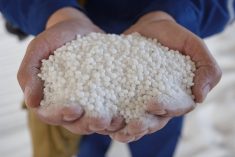
While urea is one of the products most impacted by current trade disruptions, it’s not necessarily one that can be effectively managed through variable rate application.
“I don’t have a lot of confidence with what’s out there today. I still think there’s a lot of stuff we don’t know about nitrogen and a lot of that variable rate stuff is how do we dial that it,” says Snip. Instead, he believes phosphorus and potassium are the primary nutrients to look at.
“Then you have to deal with someone to analyze the data and make it useful information. I like sitting down and having a conversation with the farmer about what makes sense. Down here in Essex, we tend to have a lot of legacy phosphorus – where an old farmyard used to be or areas that used to have vegetable production – that’s where you really get a benefit in changing the rate.”
Locally, Snip adds research from Agriculture and Agri-Food Canada Harrow points to an optimal range of 20 to 30 ppm for phosphorus. Beyond 30, and the amount of dissolved reactive phosphorus leaving the soil goes up significantly.
“Our approach is to build, maintain and drawdown. I always refer to nutrients in the soil as a bank account. We’re either putting money into that account or taking it out,” he says.
Equipment needs
If you’ve soil sampled, engaged an agronomist to analyze the data, and made a plan – then can your equipment do anything with it?
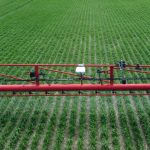
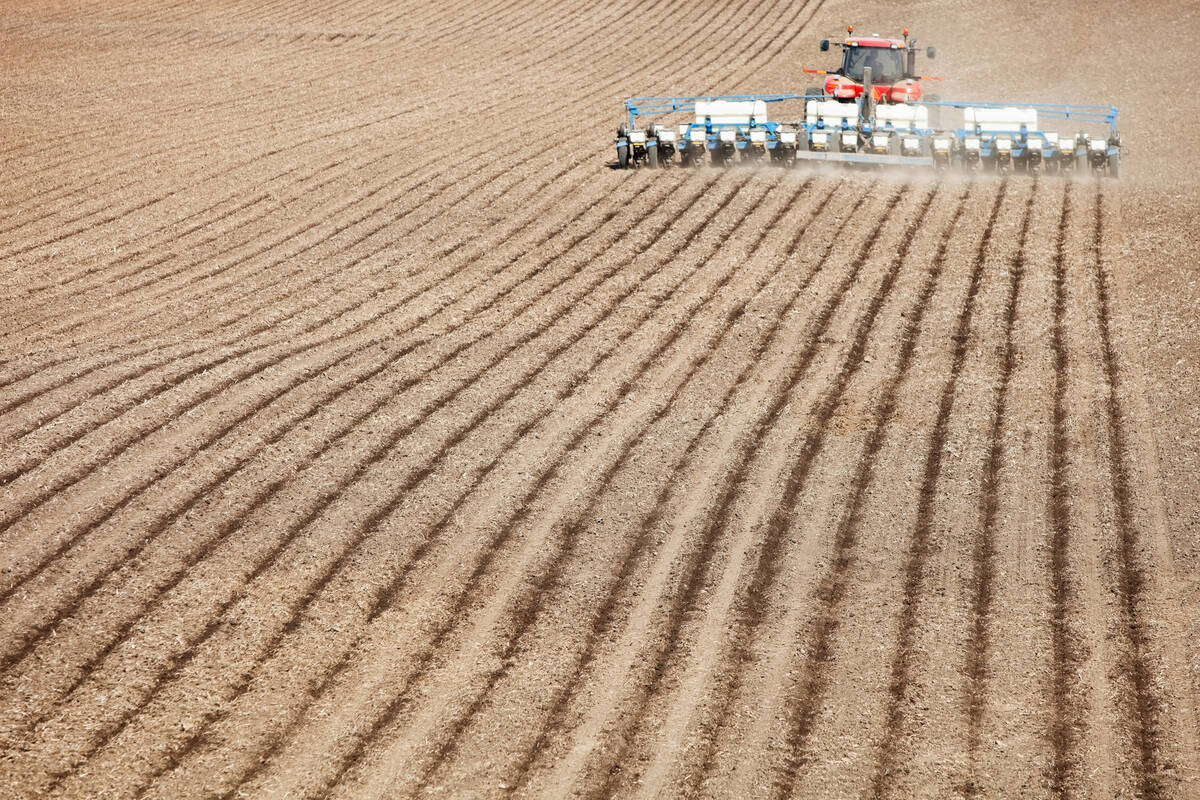
Variable-rate prescriptions require tractors and application equipment that can change rates to match a prescription. Ian McDonald, crop innovations specialist with the Ontario Ministry of Agriculture, Food and Agribusiness, says the capability of modern equipment to vary rates on-the-go is “quite amazing” today, but tends to be very large.
“Big equipment may not be able to vary across the toolbar, or the reaction time may not be what you want,” he says, adding “you have to have variation in the landscape to take advantage of variable rate.
“Variation isn’t always about changing soil type or elevation in terms of difference in crop response to fertility level.”
Managing smaller, more refined areas might remain a challenge, although Y-drop systems for repeated in-season applications have changed the equation for urea and UAN over the last decade. Looking ahead, McDonald anticipates advances in robotics will unlock the ability to apply nutrients in smaller quantities and on a smaller scale throughout the growing seas – something which could help alleviate nutrient tie-up in soil.
Snip adds the right equipment can open up new avenues of precision – fertilizer banding and strip till applications, for example. If a grower doesn’t have the necessarily capability themselves, custom applicators probably do. Neighbours might also be willing to lend a hand.
“Most people play nice together in the sandbox,” says Snip.
Misconceptions
The hard truth of variable rate, however, is growers should not expect to use significantly less fertilizer overall. The practice of redistributing more fertility to areas where it’s needed, and reducing fertility where it’s not, tends to balance out.
“We really saw an increase in more consistent yields from that variable rate…It’s not necessarily saving money, but putting it to better use,” Snip says. “It’s more about the right place when it comes to variable rate fertilizer.”
McDonald adds a variable rate approach can even increase the total amount of fertilizer applied, although that fertilizer is more strategically placed. Regarding nitrogen, he says another misconception is the economic range of nitrogen is narrow. In reality, the most economic range for nitrogen is around 25 pounds, with weather and moisture playing a key role in nitrogen availability.
“There’s an idea that if input rates are set to predicted yield potential of 200 bushels. But if everything lines up it could be 220 bushels. So you put on extra, a little insurance nitrogen,” McDonald says. That extra nitrogen, however, is not where an actual yield boost may come from.
“I don’t think that pays off … Your insurance was already built into the system through nitrogen mineralization.”
If a grower does want to experiment with different fertilizer rates, they have to know whether the experimental rate is actually responsible for the end result. McDonald continues encouraging growers to try their own on-farm rate trials with a zero-control check to identify actual fertilizer impact. Even small block checks, he says, can provide the necessary data to confidently “play with your rates.”
He adds data management remains an ongoing challenge, requiring growers to engage advisors to clean and interpret data before drawing impact conclusions. It can still be a worthwhile process, though.
“Farmers should find what they do best, and find the right people to optimize their system,” McDonald says.