
Farmer organizations from several countries agree there is common ground among them, even as geopolitical tensions and economic uncertainties swirl.
Representatives from the Global Forum on Farm Policy and Innovation (GFFPI) said they can work together and keep trusted relationships open in this environment. Last year the members produced a report on how to collaborate, and a recent webinar discussed the issue.
Katie McRobert, executive director of the Australian Farm Institute, said political leaders might take certain positions, but people working in agriculture and trade “know that’s not the real state of the world” and continue to maintain supply lines.
Read Also
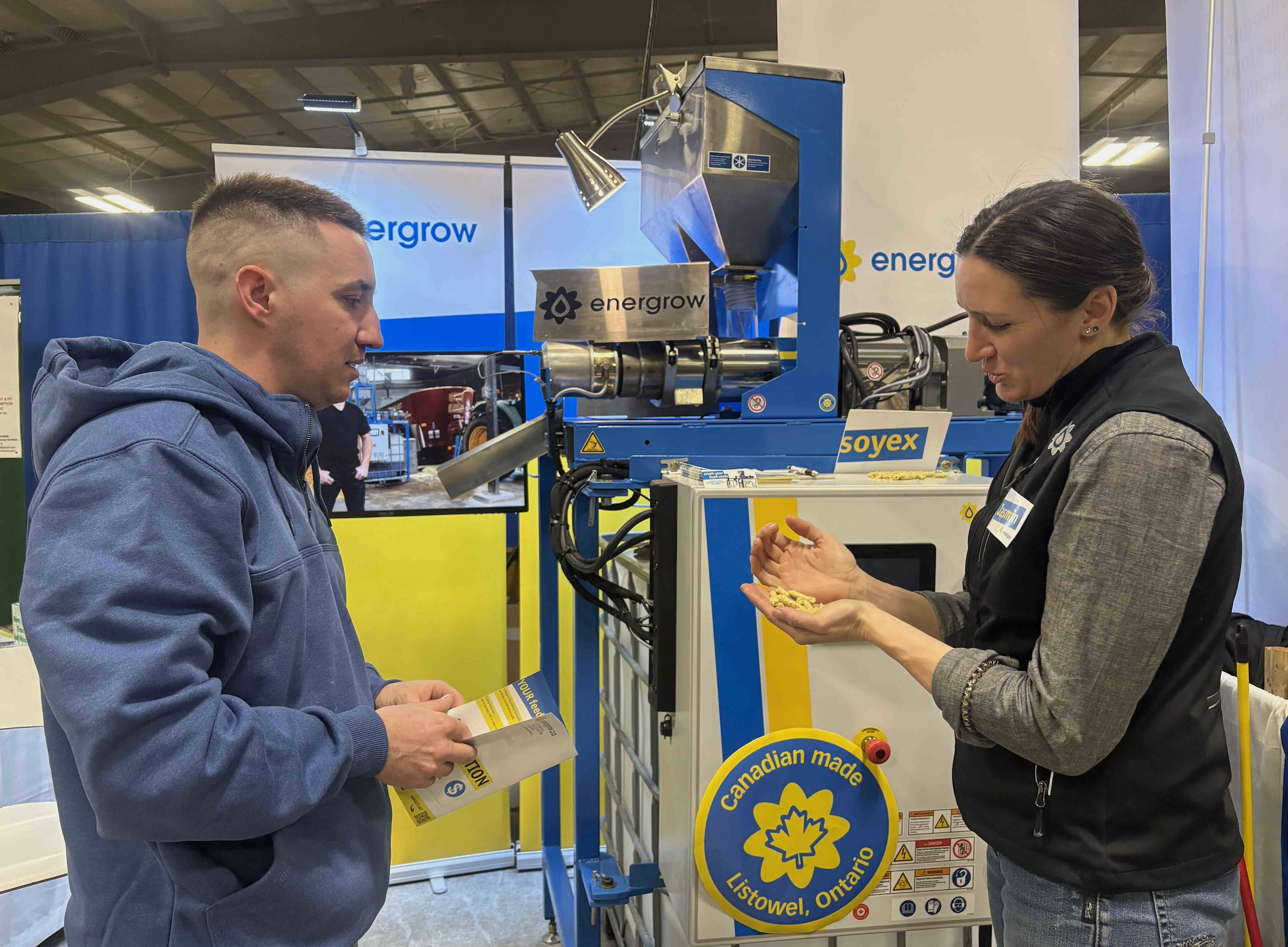
Drayton Farm Show brings local farmers and suppliers together ahead of spring planting
The 42nd annual Drayton Farm Show, held at the PMD Arena, gives farmers a chance to connect with local agriculture suppliers and services. The event is hosted by the Kinsmen Club of Drayton.
“Without trade, food security takes a nosedive very quickly.”
McRobert said it’s unrealistic to expect countries to be food sovereign and efficient. Food security policies are important, but trade can also enable that goal.
For example, she said Australia’s neighbour, Indonesia, has an unrealistic goal of food sovereignty; trade with Australia supports regional food security.
The director general of the Forum for the Future of Agriculture in the European Union, Emmanuelle Mikosz, said sharing best practices and innovation is more important now than in the past.
Shari Rogge-Fidler, chief executive officer of Farm Foundation in the United States, echoed Mikosz’s comments about the value of interconnection.
Global and natural systems move across borders without artificial boundaries, she said.
“There is so much common ground between farmers around the globe, and it’s really our governments that are less aligned,” she said.
The managing director of the Canadian Agri-Food Policy Institute said there are clearly different domestic policies in countries, but the issues are all similar.
“There are challenges with innovation. There are challenges with trade. There are challenges with sustainability,” said Tyler McCann.
“And so we get the kind of different solutions that are put in place. It creates an interesting opportunity to learn from what works and what doesn’t.”
Through the GFFPI, farmers can assess the potential of various solutions. McCann likes the way Australia funds innovation, for example.
McRobert said that’s a true public-private partnership, in which farmers pay levies to research and development funds and the Australian government matches them.
In the U.S., Rogge-Fidler said there is a grand trade policy experiment going on right now. About 80 per cent of American farmers voted for the Trump administration.
Farm Foundation has developed a policy innovation sandbox to bring in former agriculture secretaries and innovative thinkers from across the value chain. They are looking 10 years ahead and exploring new policy approaches.
The first meeting identified eight areas for policy innovation, such as risk management and extension.
McCann said Canada hasn’t seen the same level of innovation and dynamism as in other parts of the world. He suggested the agricultural policy framework could be improved.
“I think Canadians have been very sensitive to the difference on innovation,” he said.