

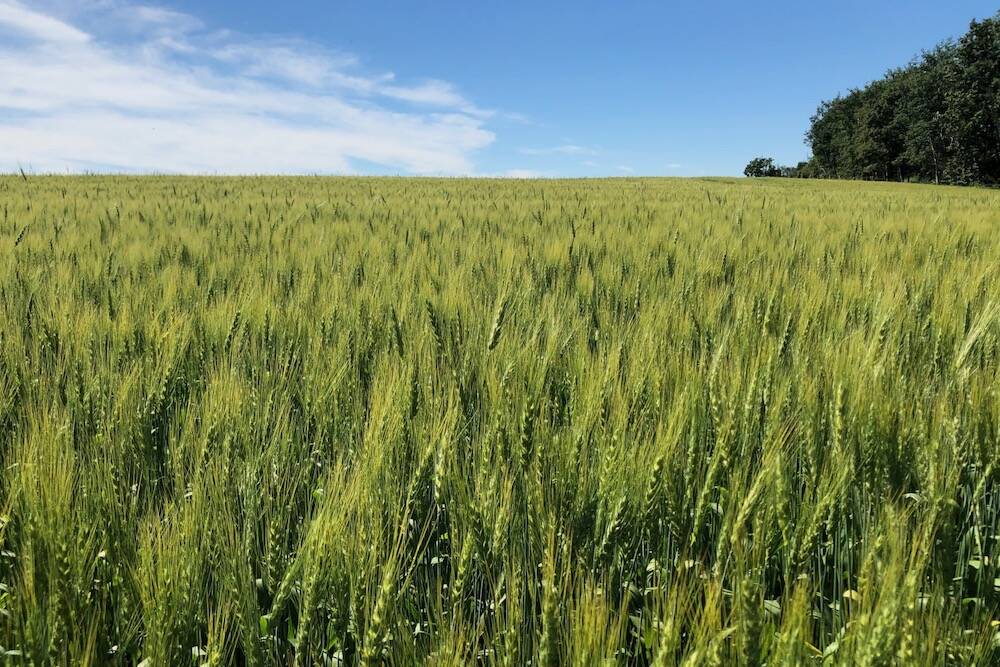
Drought has long been seen as the main danger to wheat crops, but a new study suggests that heatwaves at a key moment in the plant’s life cycle may soon pose an even greater risk.
“Flowering is one of the most sensitive stages in wheat development,” says Mikhail Semenov, mathematical modeller and emeritus fellow at Rothamsted Research in the United Kingdom. “It’s when the plant sets grain, which ultimately determines yield. Even a few days of very high temperatures or severe water stress at this stage can reduce grain numbers and significantly cut final harvests.”
Read Also
How to start variable-rate fertilizer application
Variable-rate fertilizer can improve your field’s yield uniformity – but don’t expect huge fertilizer savings, an Ontario agronomist cautions.
The study used advanced climate projections and the Sirius wheat model to estimate how short, intense heatwaves and droughts during flowering could affect global wheat yields in the future.
The results show a clear shift in risk. Drought during flowering currently causes more yield loss than heat. However, its overall global impact is expected to decline slightly in the future.
Heat stress during flowering, on the other hand, is projected to become much more damaging. By 2050, global yield losses linked to extreme heat at flowering could rise by about one-third. By 2090, those losses could increase by more than three-quarters.
While drought remains important, extreme heat at flowering is set to become a growing challenge for wheat growers worldwide.
The researchers say that farmers should: